In recent years, the integration of artificial intelligence (AI) into the field of astrophysics has revolutionized our understanding of the universe. The vast amounts of data generated by telescopes, satellites, and other observational tools have outpaced traditional methods of analysis, necessitating the adoption of AI-driven strategies to uncover cosmic insights that were previously beyond our reach.
One of the most notable applications of AI in astrophysics is the identification and study of exoplanets. These distant worlds, which orbit stars beyond our solar system, offer tantalizing clues about the potential for life elsewhere in the universe. Traditional techniques relied heavily on painstakingly analyzing light curves from stars to detect the minute dimming that occurs when an exoplanet transits across a star's face. However, with AI, this process has become exponentially more efficient. Machine learning algorithms, trained on known exoplanet characteristics, can sift through troves of data to unearth subtle patterns indicative of new exoplanets, delivering results in a fraction of the time previously required.
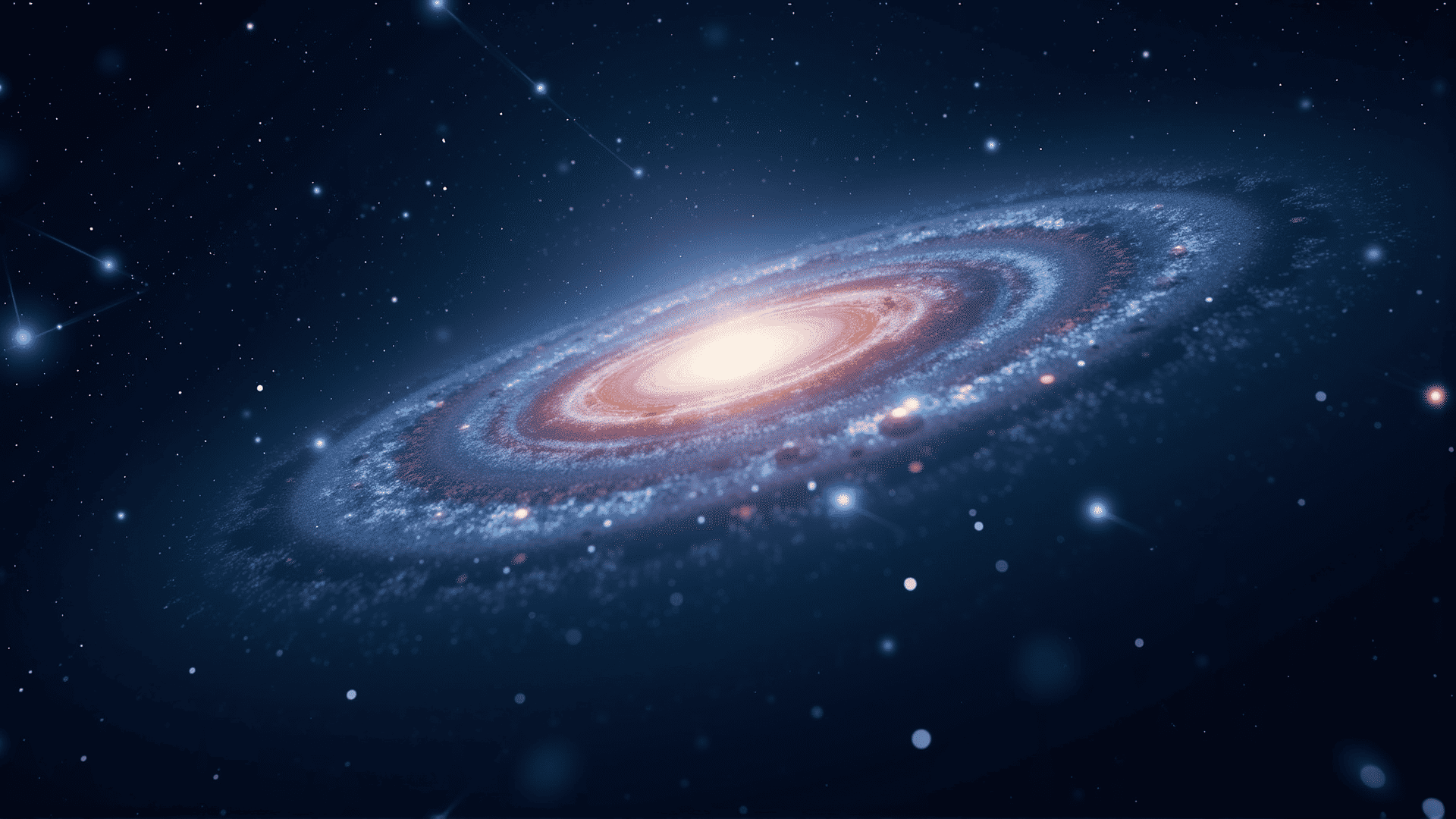
The quest to map the vast expanse of the cosmos has also been greatly enhanced by AI. In particular, neural networks have been deployed to tackle the immense challenge of galaxy classification. Given the sheer number of galaxies, manually sorting each one based on structure and properties was an almost Sisyphean task. AI has stepped in to automate this process, utilizing models that can classify galaxies with remarkable accuracy and speed. This automation not only saves time but also increases the precision with which we can understand galaxy formation and evolution.
Moreover, AI's ability to recognize patterns and predict outcomes is being leveraged to predict cosmic events, such as supernovae. By analyzing historical data and identifying precursors to these explosive events, AI can provide astronomers with advance warnings, enabling them to prepare and capture valuable data that would otherwise be missed.
The implications of AI's involvement in astrophysics further extend to dark matter and dark energy—the enigmatic components that make up a significant portion of our universe. AI algorithms are being employed to search for signals and anomalies within cosmic microwave background data, or to simulate complex models of how these dark entities interact with visible matter. Through these approaches, researchers hope to unveil more about the underlying architecture and fate of the universe.
While the capabilities of AI in astrophysics are undeniably impressive, it is important to recognize the complementary nature of this technology. AI enhances human effort, empowering scientists to ask new questions and explore new frontiers by alleviating some of the burdens of data processing and analysis. The insights provided by AI are also contingent upon the quality and breadth of input data, necessitating ongoing improvements and oversight to ensure accurate results.
In conclusion, the marriage of artificial intelligence and astrophysics marks a new chapter in our celestial exploration. AI not only expedites the process of discovery but also opens doors to investigating phenomena that were once considered out of reach. As technology continues to advance, so too will our understanding of the cosmos, driven by the collaborative power of human ingenuity and AI. Together, they hold the key to unraveling the mysteries of the universe, guiding us to a deeper comprehension of our place within it.